Backflow testing and compliance is one obligation with two halves. The testing half happens on site: a licensed backflow plumber checks that each testable device on your property still stops water flowing back into the mains. The compliance half is everything around the test: knowing which devices you have and when each one is due, getting the report to your water authority on time, and keeping the paperwork. A missed report or a lapsed due date leaves a property just as non-compliant as a failed test.
This guide walks Melbourne property owners through the whole cycle, from working out whether your property needs a device to what happens after the tester leaves.
What Backflow Compliance Actually Means
For a property with a testable backflow prevention device, compliance means five things are true at the same time:
- The device suits the property. It is the right type for the hazard rating your water authority has given the connection.
- It has been tested in the last 12 months by a licensed plumber holding the backflow prevention specialised class, to AS/NZS 2845.3.
- Any fault has been fixed. A device that failed has been repaired or replaced and retested.
- The report has been lodged. The inspection and maintenance report reached your water authority inside its reporting window.
- You can prove it. You hold the report and certificate and can produce them if the authority, an insurer or a buyer asks.
If any one of those is missing, the property is not compliant, even if the device itself works perfectly.
Does Your Property Need to Comply?
A testable device is required wherever your water authority has assessed the connection as a backflow risk. Almost every commercial property in Melbourne falls into that group, which our guide to commercial backflow prevention covers in detail.
Homes are less obvious. A residential property commonly needs a testable device where it has:
- A below-ground rainwater tank connected to the mains supply
- An in-ground irrigation system
- A bidet or similar fixture connected to the drinking water supply
- A private fire service
- A written notice from the water authority requiring one
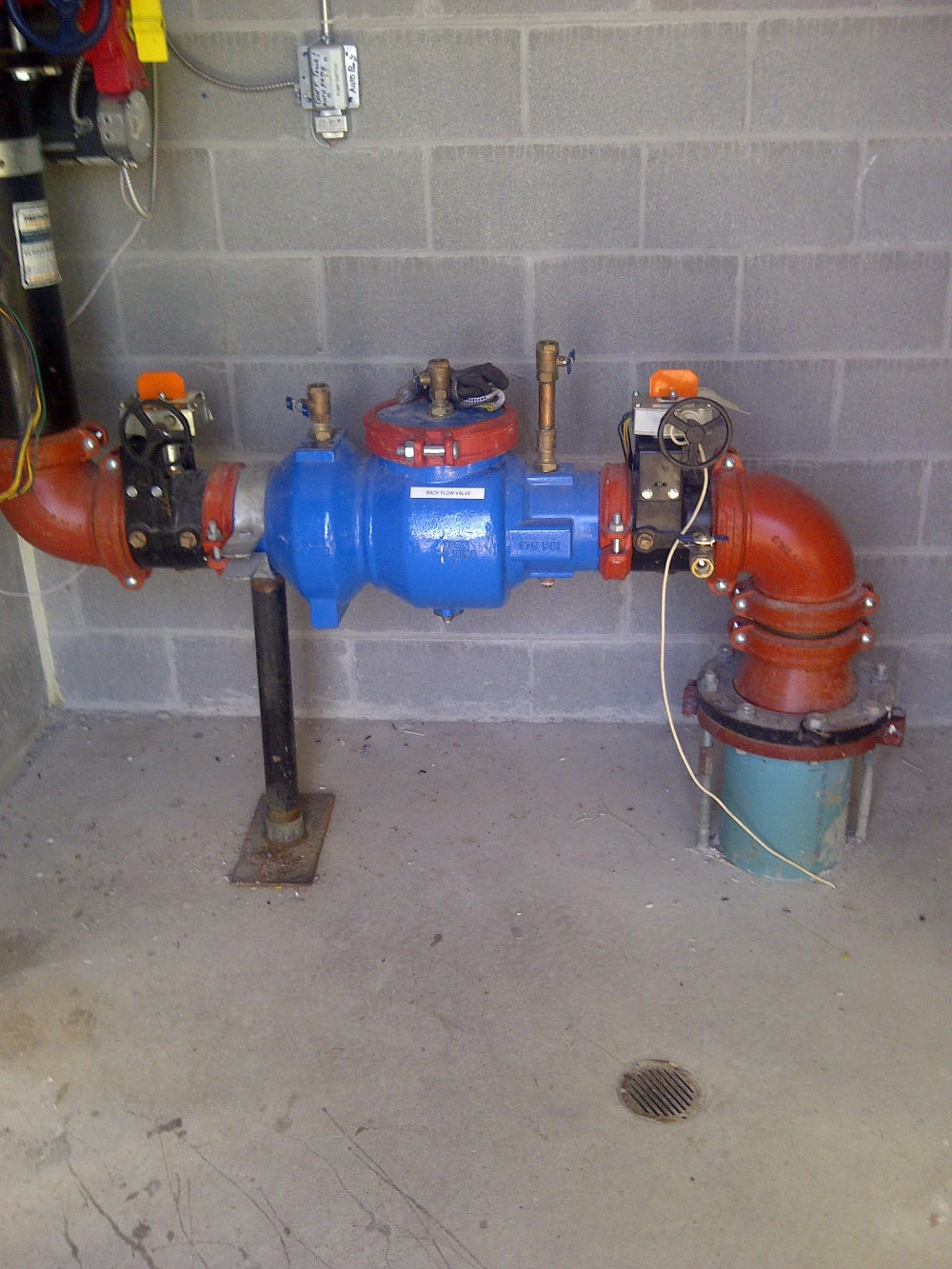
If you are not sure, look for a notice from your water authority, a previous test report in the property file, or a brass valve assembly near the water meter. Our explainer on testable backflow prevention devices shows what to look for, and the rules behind them are set out in backflow testing requirements in Melbourne.
The Annual Compliance Cycle, Step by Step
1. Know what you have and when each device is due
Every testable device has its own record with the water authority and its own due date: no more than 12 months after its last test. The clock starts at the commissioning test when the device is installed. A property with a device at the meter, another on the fire service and a third on the irrigation has three due dates, and they do not have to line up. For the reasoning behind the 12-month interval, see how often a backflow device should be tested.
2. Book a licensed backflow plumber
General plumbing registration is not enough. The test must be carried out by a plumber whose licence includes the backflow prevention specialised class, and the report carries that licence number. Water authorities do not accept a report from anyone else. Our page on certified backflow testers explains what the accreditation involves.
3. Prepare the site
The tester needs to reach every device, and water is isolated downstream of each one while it is tested, usually for 20 to 40 minutes. Before the visit:
- Clear anything built up around the device: landscaping, stored goods, fencing
- Arrange keys to plant rooms, meter cupboards and locked gates
- Let tenants, residents or staff know the water will be off for a short time
- In a strata building, tell the building or facilities manager
How to pass a backflow test has a fuller preparation checklist.
4. The test
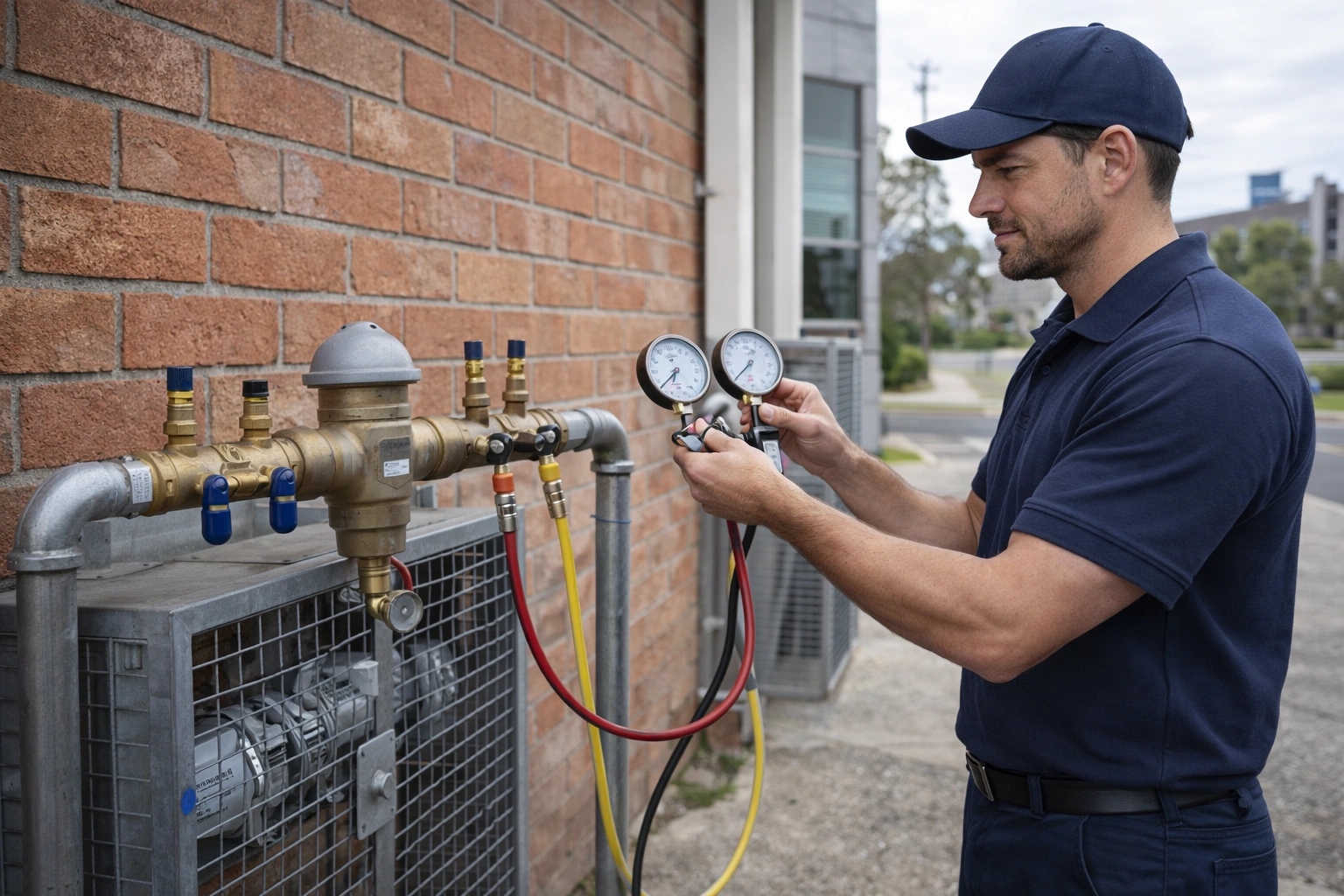
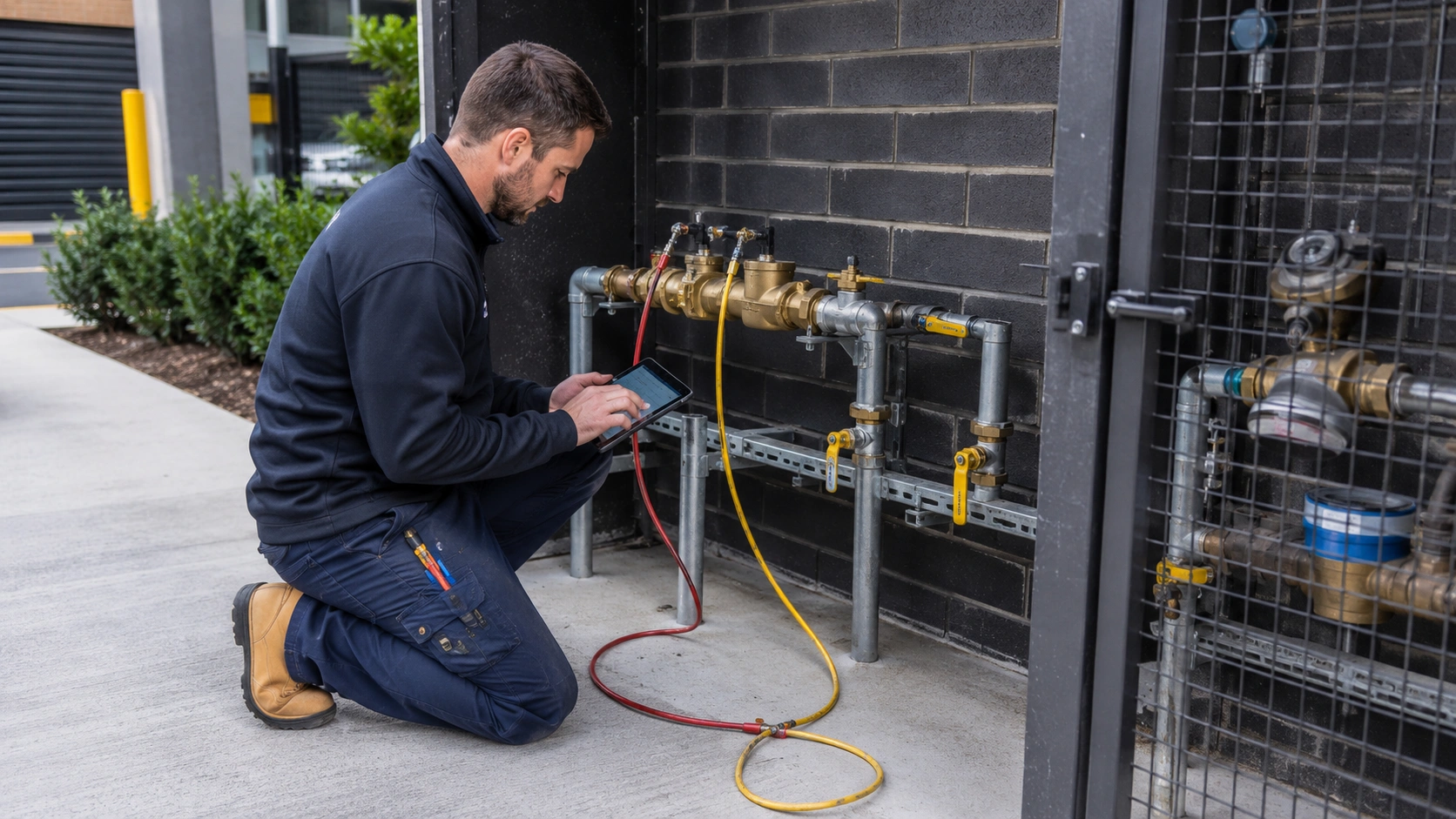
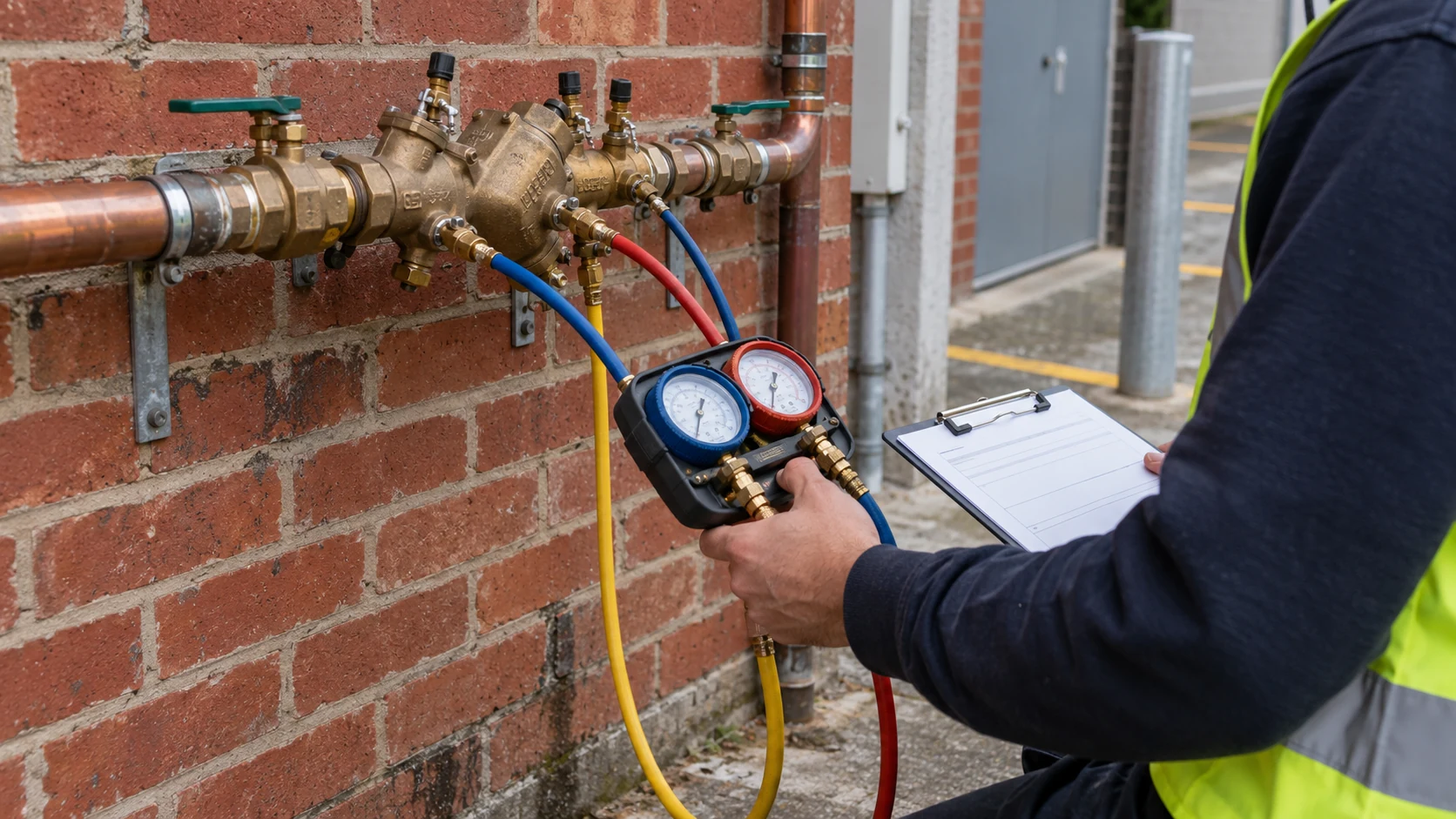
The plumber isolates the device, connects a calibrated test kit to its test cocks and measures how each check valve holds pressure. On a Reduced Pressure Zone (RPZ) valve, the relief valve is tested as well. Backflow testing in Melbourne explains the procedure for each device type, and RPZ valve testing covers the high hazard assemblies.
5. Repair and retest if the device fails
A failed test is not the end of compliance, but it has to be closed out. Worn seals, debris in the check valves and a sticking relief valve are the usual causes, and most are repaired on the same visit. The device is then retested, and the report records the final result. The six most common backflow testing failures explains what goes wrong and why.
6. The inspection and maintenance report
The report is the evidence that the test happened and what it found. It typically records:
- The property address and owner
- The device make, model, size and serial number, and where it is installed
- The device type and the hazard it protects against
- The test readings for each check valve and, on an RPZ, the relief valve
- The result, and any repairs carried out
- The tester's name, licence number and the date
Owners often call this the backflow certificate. We issue the compliance certificate on site the same day as the test. Our backflow compliance and reporting service explains how reports are prepared and submitted for each authority.
7. Lodge the report with your water authority
The report has to reach your water authority inside its reporting window, and the window depends on who supplies your water:
- Greater Western Water (Melbourne's west and north-west): within 14 days of testing. See the Greater Western Water compliance guide.
- Yarra Valley Water (the north and much of the eastern suburbs): within 20 business days of testing. See the Yarra Valley Water requirements guide.
- South East Water (the south-east, bayside suburbs and the Mornington Peninsula): within 30 days of testing. See the South East Water compliance guide.
Lodgement is the owner's responsibility, but most owners have the tester submit the report for them. A test with no report on file counts as no test at all.
8. Keep the records and diarise the next test
Keep each year's report and certificate together in the property file. They are what you show the water authority if a notice arrives, and what a buyer, insurer or new manager will ask for. Then set the next due date for every device. We send annual reminders before each test falls due, so the date never depends on someone remembering.
Who Is Responsible for Backflow Compliance?
The property owner. The water authority issues its notices to the owner and holds the owner responsible for the test, any repairs and the report.
- Leased properties. A lease can require the tenant to arrange or pay for testing, and many commercial leases do, but that is an arrangement between owner and tenant. It does not change who the authority holds responsible.
- Strata and apartments. The owners corporation is generally responsible for devices on common property, such as the main meter and a shared fire service. A lot owner may be responsible for a device on their own meter.
- Managed properties. A property manager or building manager can book and coordinate testing on the owner's behalf, which is how most managed portfolios run it. Confirm in writing who is doing it each year.
- Buying or selling. The obligation stays with the property, so it passes to the new owner at settlement. Buyers should ask for the last test report and the next due date.
Where Compliance Most Often Breaks Down
Most compliance problems we see on Melbourne properties have nothing to do with a faulty device:
- The test was done but the report was never lodged. To the water authority, the device was never tested.
- The due date left with a previous owner or manager. A sale or a change of managing agent is the most common point where the annual cycle stops.
- Notices went to an old address. The authority writes to the owner on its records; if that record is out of date, the first letter you see may be a second notice.
- A device was replaced or moved without being registered. The authority still expects a report for the old device.
- The test was done by someone without backflow accreditation. The report is not accepted, and the test has to be repeated.
- Only one device was tested. The meter device is done, but the fire service or irrigation device is missed.
- A residential device was forgotten. A device fitted with a rainwater tank or irrigation system years ago that nobody on the current title knows about.
What Happens If a Property Falls Out of Compliance?
Water authorities in Melbourne generally start with a reminder, then issue a written notice requiring the test within a set period. If that is ignored, the authority can arrange its own licensed contractor to test the device and recover the cost from the owner, and in serious cases it can restrict or disconnect the supply to a property that presents an uncontrolled backflow risk. Every step of that is avoided by a test and a lodged report.
Frequently Asked Questions
What does backflow testing and compliance involve?
An annual test of each testable backflow prevention device by a licensed backflow plumber, repair and retest of any device that fails, lodgement of the inspection and maintenance report with your water authority inside its reporting window, and keeping the records. The owner is responsible for all of it, though most owners have their tester handle the lodgement.
Do residential properties need backflow testing?
Only where the property has a testable device. That is common where a home has a below-ground rainwater tank connected to the mains, an in-ground irrigation system, a bidet or a private fire service, or where the water authority has issued a notice. A home with standard plumbing and none of those connections usually does not.
How do I find out when my backflow test is due?
Check the date on your last test report: the next test is due no more than 12 months after it. If you have no report, check for a notice from your water authority, or ask a licensed backflow plumber to locate the device and confirm its status.
What is a backflow test report, and who sends it to the water authority?
It is the inspection and maintenance report the tester completes after each test, recording the device details, the readings, the result and the tester's licence number. The owner is responsible for lodging it, but the tester usually submits it on the owner's behalf. We lodge every report for you and issue the compliance certificate the same day.
I have just bought a property with a backflow device. What do I need to do?
Ask the seller or their agent for the last test report and the next due date, then check that the water authority's record shows you as the owner. If there is no report, or it is more than 12 months old, book a test now. The obligation passed to you at settlement.
Can a tenant or property manager take care of backflow compliance?
Yes, they can arrange the test and the paperwork on the owner's behalf, and a lease can make that the tenant's job. The water authority still treats the owner as responsible, so confirm each year that the test was done and the report lodged.
Backflow Testing and Compliance Across Melbourne
Aussie Backflow Testing handles the whole compliance cycle for homes, strata buildings and commercial properties across Melbourne, from the western suburbs to the eastern suburbs and down to the Mornington Peninsula: annual backflow testing, inspection and maintenance, repairs, and reports lodged with Yarra Valley Water, South East Water and Greater Western Water inside their windows. We are licensed backflow prevention plumbers, VBA Licence No. 28465, and we issue your compliance certificate on the day and remind you before the next test is due.
Send us your property details or call 0488 410 033 to book your annual test. See the areas we service for your suburb.
This guide is current as of September 2026. Backflow testing and compliance in Victoria is governed by the Plumbing Regulations 2018, AS/NZS 3500.1, AS/NZS 2845.3, the Plumbing Code of Australia and the backflow prevention and containment policies of each Melbourne water authority. Requirements change; confirm current obligations with your water authority or a licensed backflow prevention plumber.